In electricity, installations are classified according to their voltage level: Low Voltage (LV), Medium Voltage (MV) and High Voltage (HV). These categories are not there by chance: they determine the type of equipment to be used, the safety rules, the insulation needs and even the way to intervene on the equipment.
The exact limits may vary from one country to another, but in Europe and in particular in France with the NF C 18-510 standard, the following thresholds are generally found:
1. Low voltage (LV)
Voltage ranges:
LV A: up to 50 V AC and 120 V DC. This is called very low voltage (VHV), which is mainly used to guarantee safety or power small electronic equipment. In humid environments, the thresholds even drop to 25V and 60V respectively.
LV B: from 50 V to 1,000 V AC, and from 120 V to 1,500 V DC according to the IEC.
What is it for? These are the tensions of everyday life: our homes, offices, shops, and a good part of the industrial machinery work on LV. This is the field of wall sockets, lighting, classic electrical panels...
Safety and equipment The main risk in LV remains electrocution or fires caused by a short circuit. Insulation is relatively simple: plastic, rubber or standard insulation. Typical equipment includes LV/LV transformers, flexible cables, household circuit breakers, switches, etc.
2. Medium Voltage (MV)
Voltage range: From more than 1,000 V to 50,000 V AC. Up to 75,000 V DC.
Uses: MV is used for the distribution of electricity on a larger scale: industrial areas, hospitals, train stations, shopping malls, and even the supply of entire neighborhoods. It is ideal for transporting energy with less loss than LV, but over reasonable distances.
Safety and insulation: Dangers increase sharply: electric arcs, serious burns, electrocution. Access to MV facilities is strictly regulated and reserved for authorised persons. The insulation becomes much more robust: shielded cables, ceramic insulators, vacuum or SF6 gas switchgear, etc.
Examples of equipment: Transformer substations, HVA cabinets, MV circuit breakers, etc.
3. High Voltage (HV)
Voltage Range :
HV A: from 50 kV to 300 kV.
HV B: above 300 kV — this is called Very High Voltage (VHV), used for the main axes of electric transport.
What is it for? HV is the backbone of national networks. It allows electricity to be transported over very long distances, from power plants to consumption areas. Without HT, it is impossible to supply an entire country efficiently.
Safety and insulation: The risks are extreme: at these levels, an electric arc can occur even without direct contact. Access is strictly reserved for highly qualified specialists, equipped with very specific protections. The insulation is massive: long chains of ceramic or glass insulators, long distances in the air, special cables...
Examples of equipment: Overhead lines on pylons, high-voltage substations, etc.
Une machine éloignée du tableau électrique, ou qui ne fonctionne pas avec la tension disponible sur le site : dans ces situations, plusieurs solutions existent, et l’autotransformateur en fait partie.…
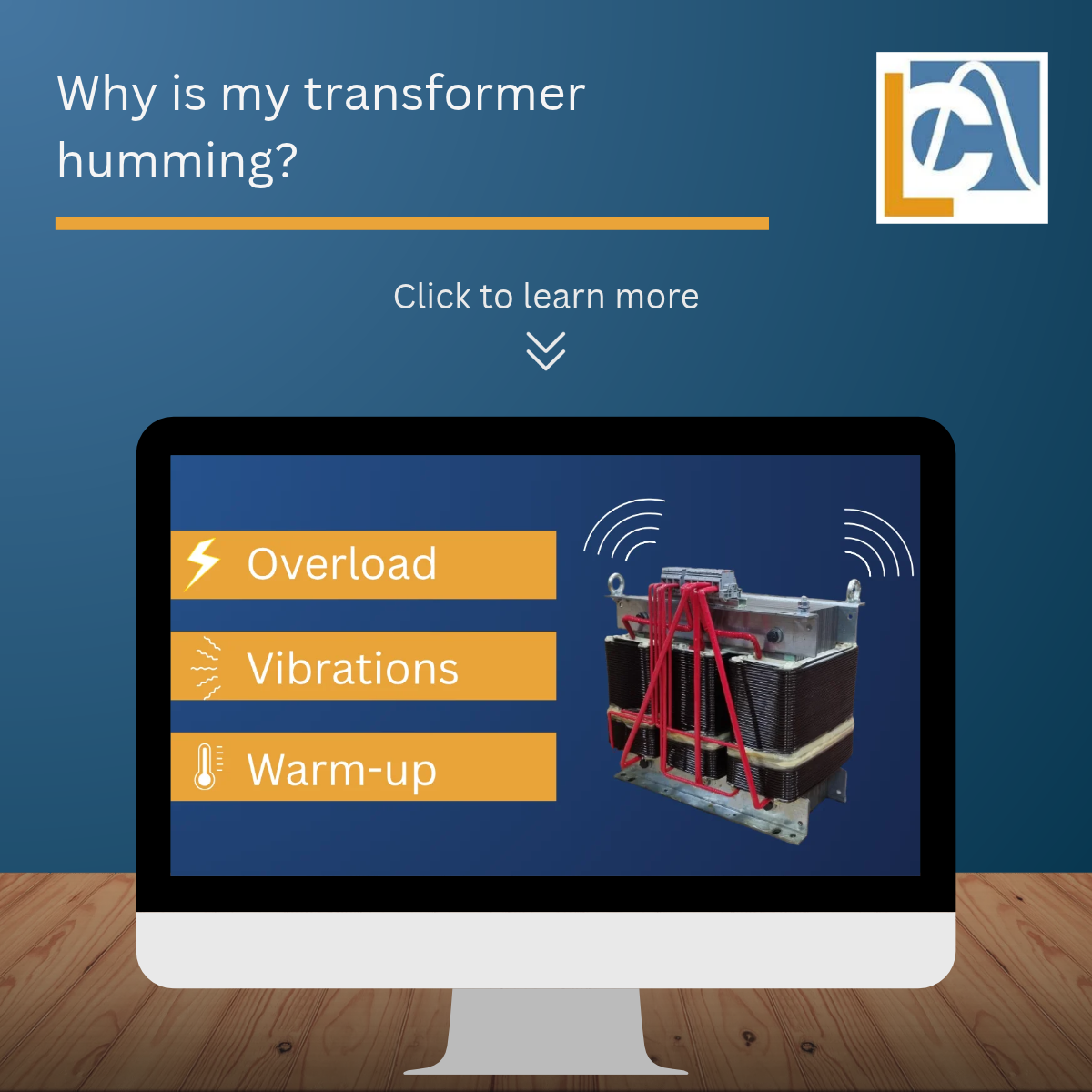
A transformer that hums isn't necessarily defective. An electrical transformer naturally produces a slight hum when it's operating. The laminations in the magnetic circuit expand and contract very slightly…
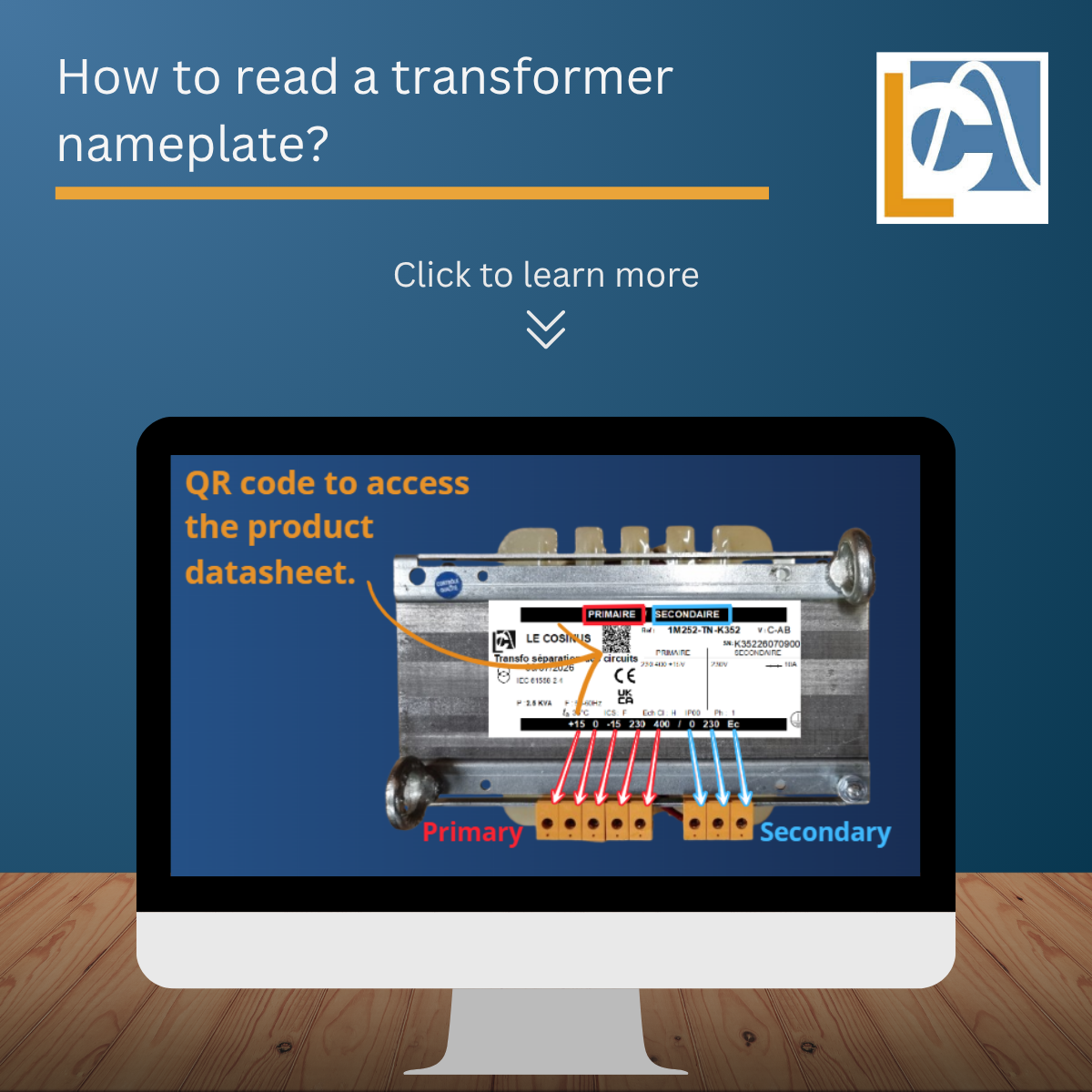
Connecting a transformer is not just about connecting conductors. To ensure a reliable, high-performance and safe installation, it is essential to know how to correctly interpret the nameplate.…