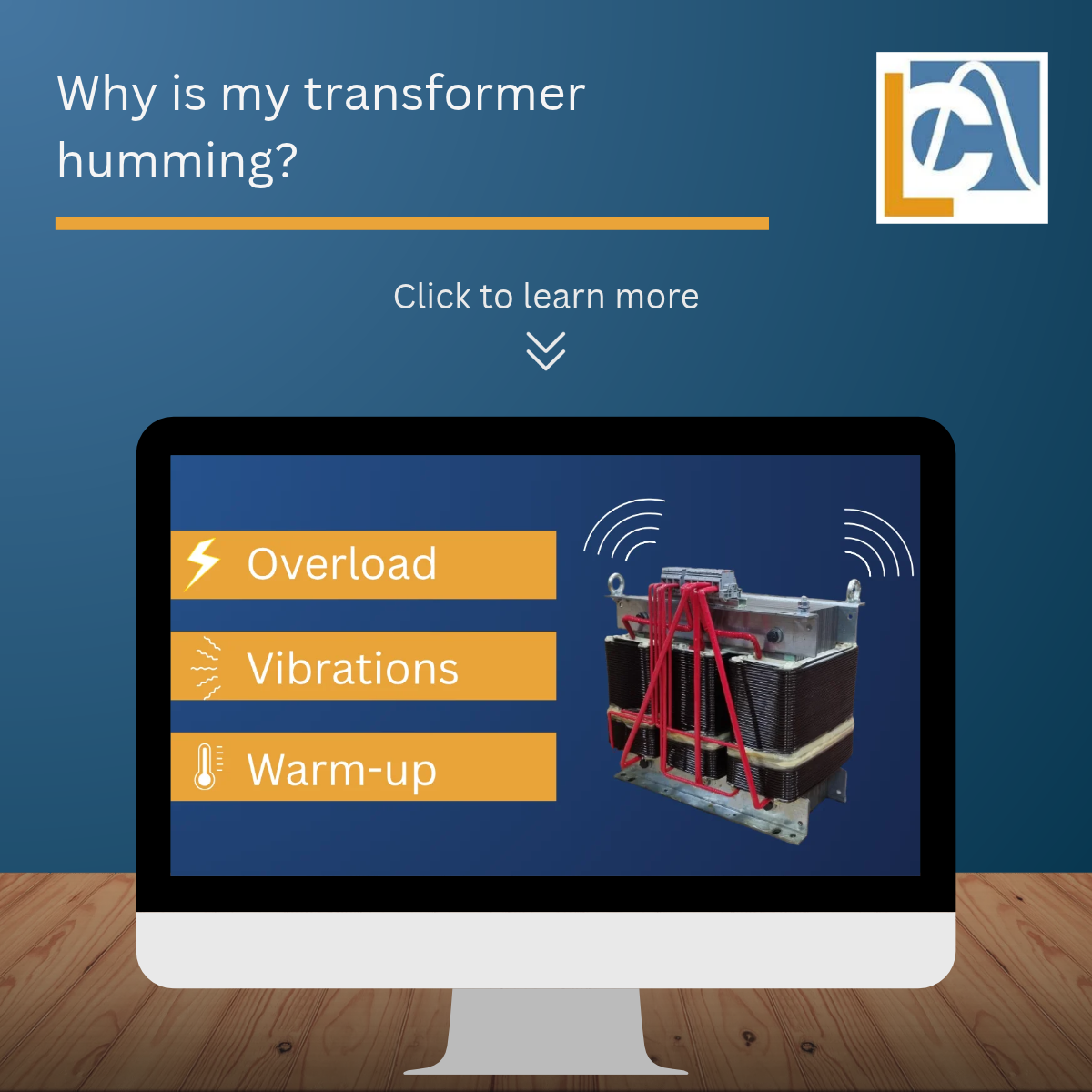
A humming transformer isn’t necessarily defective. An electrical transformer naturally produces a slight humming sound when it’s operating. The laminations in the magnetic circuit expand and contract very slightly in time with the alternating current. This noise should remain low, steady, and consistent. If it suddenly becomes louder, irregular, or is accompanied by an unusual odor, overheating, or significant vibrations, an inspection is necessary.
Translated with DeepL.com (free version)
Where does the normal noise come from?
The noise comes mainly from the magnetic core. Under the influence of the alternating magnetic flux, the metal laminations expand and contract very slightly—a phenomenon known as magnetostriction. These movements create small vibrations that are transmitted to the chassis.
On a 50-Hz power grid, the humming sound is often perceived at around 100 Hz, because the core deforms twice per cycle. A low-pitched, continuous sound that has remained unchanged since the equipment was put into service is therefore generally normal.
Pourquoi le bruit d’un transformateur peut-il augmenter ?
Too heavy a load
As the load increases, the current flowing through the windings also increases. The higher the load, the greater the current in the windings. Electromagnetic forces can then amplify certain vibrations. In fact, the electromagnetic forces between the windings intensify and cause the windings to vibrate, which increases the noise. If this increase in noise is accompanied by unusual heating, it may indicate an overload or improper sizing. See also our guide to calculating the required power of a transformer.
Loose fasteners or a resonance
Over time, vibrations can cause a screw, a cover, a sheet metal panel, or a bracket to come loose. A base that is too rigid can also transmit noise to walls and floors. A mechanical inspection performed by a professional can identify the affected component and determine whether vibration-damping measures are necessary.
Une alimentationouunrefroidissementanormal
Excessively high voltage, harmonics, or poor-quality power can alter the typical noise. This is because the flux in the core is proportional to the voltage: excessively high voltage increases it and thus accentuates the magnetostriction. The reference values are listed on the transformer nameplate.
In transformers equipped with forced ventilation, noise can also be caused by a dirty or worn-out fan. Insufficient ventilation increases thermal stress; our article on overheating and insulation classes provides further information on this topic.
Aging or an internal defect
Deteriorated insulation, a damaged winding, or a loose internal component can cause an irregular humming, clicking, or crackling sound. These sounds should not be dismissed as a mere nuisance.
What signs should raise a red flag?
Have the installation inspected promptly if you notice:
a sudden increase or a change in tone;
clicking or crackling sounds;
overheating or a burning smell;
smoke, a leak, or visible damage;
repeated electrical tripping.
If you notice smoke, sparks, or a strong burning odor, move away from the equipment, follow the site’s safety procedures, and contact the electrical supervisor or the appropriate emergency services.
Can you do it yourself?
You can remotely monitor when noise occurs and check whether it varies with site activity. However, do not open the device or attempt to tighten its connections. Electrical measurements and any internal work must be performed by a qualified person. The INRS reiterates the principles of electrical risk prevention, particularly ensuring the safety of the installation.
What can a professional check?
The diagnostic process begins with a comparison of the noise to the equipment’s normal operating conditions. The technician then checks the condition of the fasteners, ventilation, temperature, supply voltages, and load level. Depending on the type of transformer, the technician may also analyze vibrations, check for harmonics, or perform insulation measurements.
These checks help determine whether the noise is coming from the core, the windings, a cooling component, or the structure on which the unit is mounted. It is best to take action as soon as a change in noise is detected, rather than waiting for a failure or more significant damage to occur. Record the date and circumstances of the anomaly.
How can you prevent unusual noises?
Preventive maintenance of the transformer helps identify loose connections, dirt buildup, or overheating before a failure occurs. Also keep a record of inspections: this makes it easier to identify changes in noise levels.
Une machine éloignée du tableau électrique, ou qui ne fonctionne pas avec la tension disponible sur le site : dans ces situations, plusieurs solutions existent, et l’autotransformateur en fait partie.…
Connecting a transformer is not just about connecting conductors. To ensure a reliable, high-performance and safe installation, it is essential to know how to correctly interpret the nameplate.…
When equipping an HV/MV substation, the choice of transformer is not simply a matter of power rating. The installation environment, safety constraints, maintenance requirements…