In many industrial, technical, and sensitive environments, the electrical power supply must be reliable, stable, and safe. The isolation transformer is specifically designed to meet these requirements.
Although often overlooked within an electrical installation, it plays a vital role in both protecting people and safeguarding equipment.
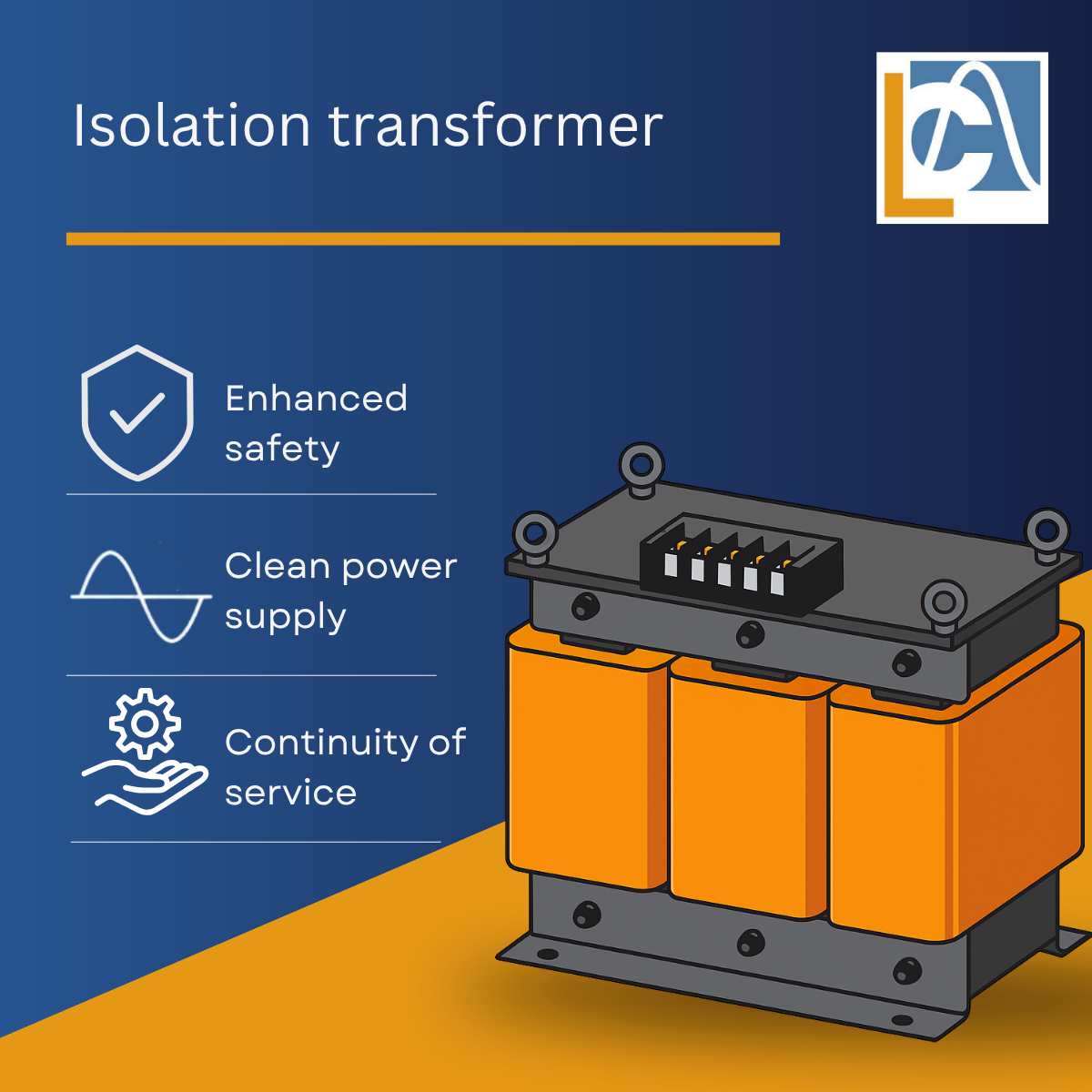
Safety First: Galvanic Isolation
The primary function of an isolation transformer is to provide complete electrical separation between the power supply and the equipment it supplies.
This galvanic isolation eliminates any direct electrical connection between the transformer's primary and secondary sides. Electrical energy is transferred solely through the magnetic field generated between two separate windings.
Why is this important? In the event of a fault on a machine, leakage current cannot flow back into the main power network. As a result, the risk of electric shock to operators is significantly reduced.
This level of protection is essential in critical environments such as damp workshops, laboratories, industrial facilities, and operating theatres, where personnel safety and continuity of service are paramount.
Galvanic isolation also enables the implementation of a specific earthing system (typically an IT system with an isolated neutral), which is widely used in hospitals and other sensitive installations.
Protecting Equipment and Improving Reliability
Beyond ensuring safety, an isolation transformer acts as a true shield for connected equipment.
The public power grid can be affected by voltage surges, electrical noise, and high-frequency disturbances. An isolation transformer helps attenuate these disturbances, providing a cleaner and more stable power supply.
In complex electrical systems, it also eliminates ground loops, which are often responsible for interference, electrical noise, and malfunctions in audio, video, and IT equipment.
As a result, connected equipment is better protected, operates more reliably, and benefits from an extended service life.
Adapter et optimiser l’alimentation électrique
The isolation transformer is not limited to providing safety—it is also an effective solution for adapting the power supply to the requirements of an installation.
Créer un neutre : Certaines installations sont alimentées en triphasé 400 V sans neutre, alors que de nombreuses machines nécessitent un neutre pour leurs circuits de commande ou de contrôle. Avec un couplage adapté (par exemple Dyn11), le transformateur permet de générer un neutre stable en sortie.
Adapting the Supply Voltage: When imported equipment is designed to operate at a specific voltage (such as 230 V three-phase, 208 V, or others), an isolation transformer can adjust the supply voltage to ensure full compatibility.
Reducing Harmonics: Certain transformer vector groups, particularly those incorporating a delta winding, can trap harmonic currents generated by connected equipment, preventing them from propagating throughout the rest of the electrical installation.
An isolation transformer is far more than a simple electrical component. It is a key element in ensuring personnel safety, protecting sensitive equipment, and providing a stable, reliable, and properly adapted power supply.
Une machine éloignée du tableau électrique, ou qui ne fonctionne pas avec la tension disponible sur le site : dans ces situations, plusieurs solutions existent, et l’autotransformateur en fait partie.…
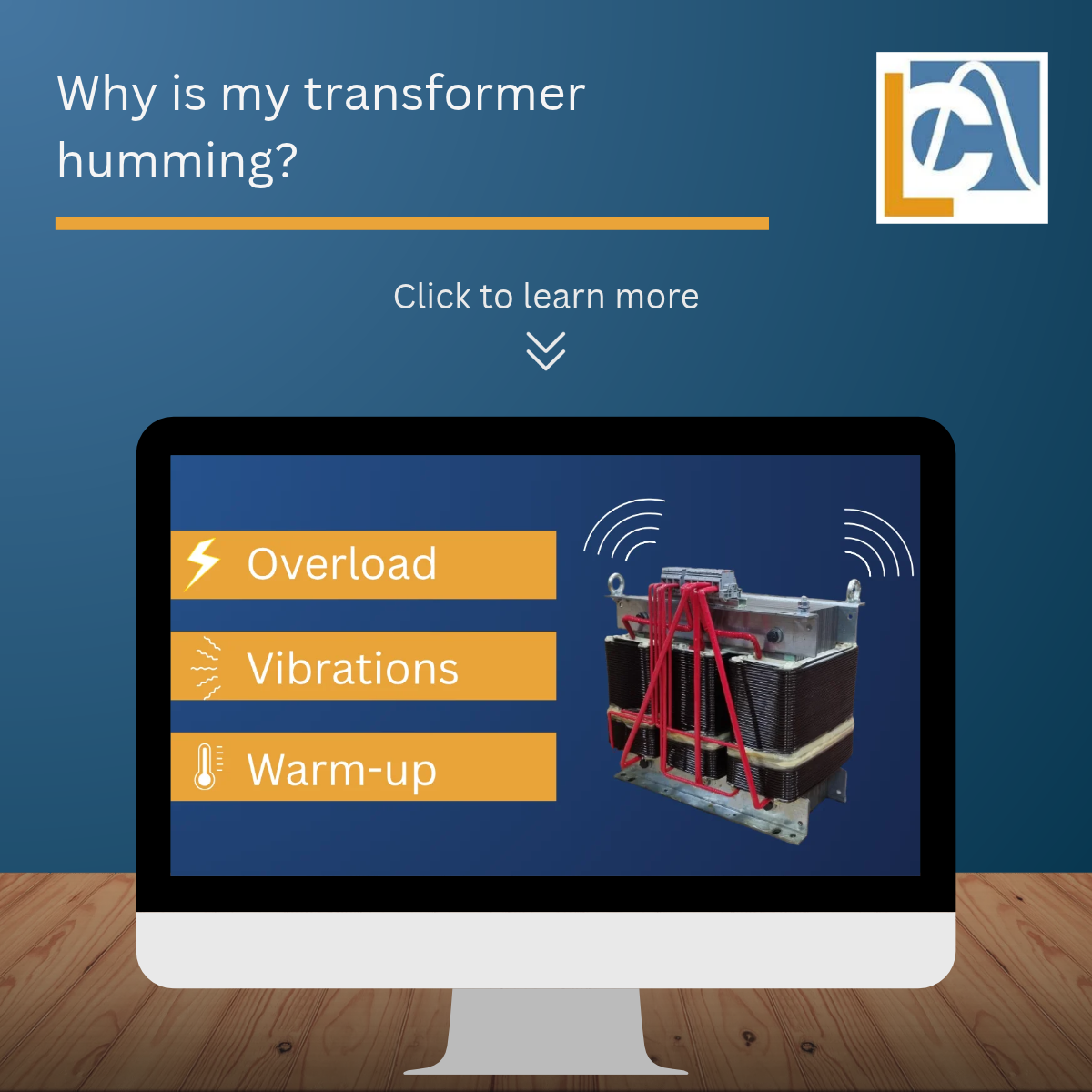
A transformer that hums isn't necessarily defective. An electrical transformer naturally produces a slight hum when it's operating. The laminations in the magnetic circuit expand and contract very slightly…
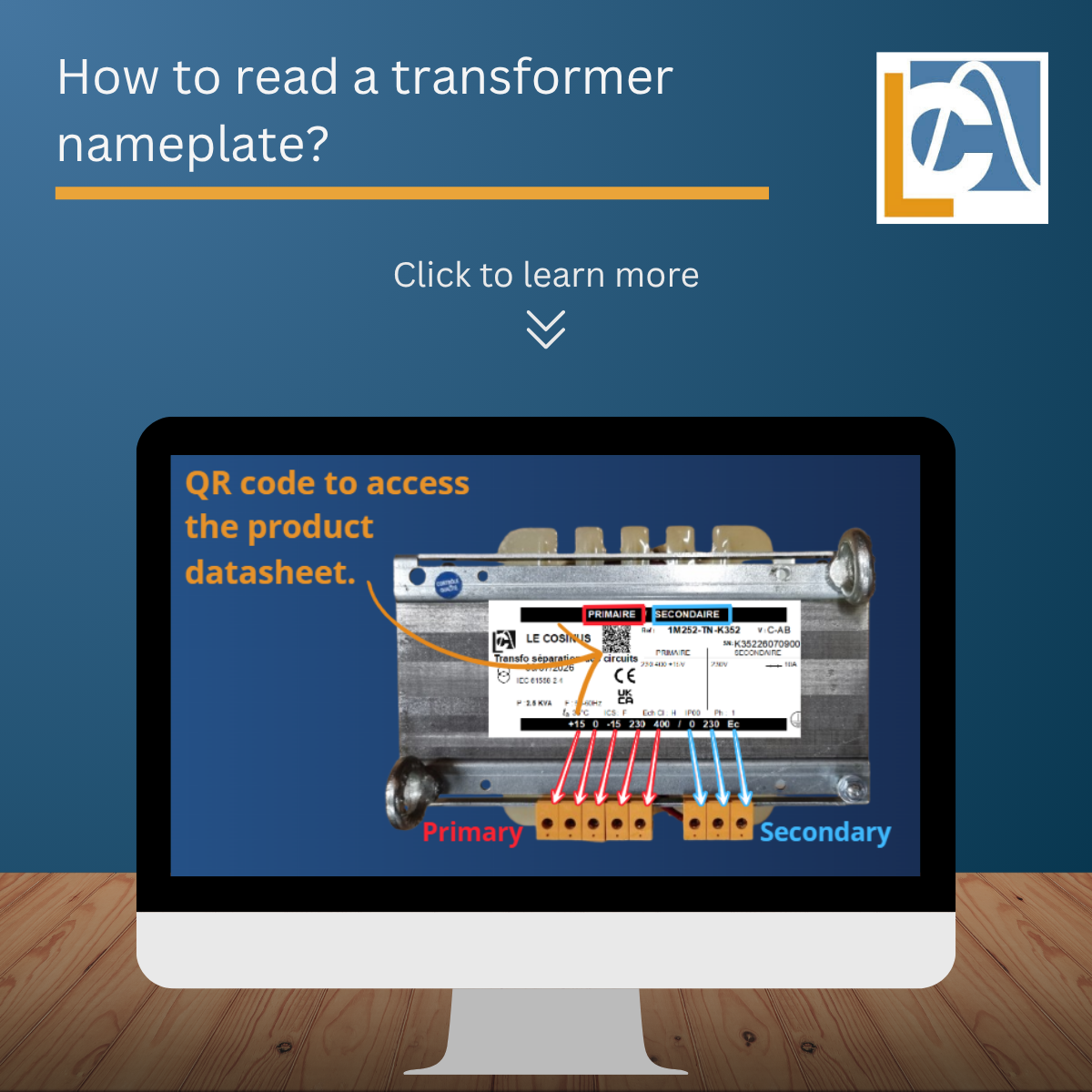
Connecting a transformer is not just about connecting conductors. To ensure a reliable, high-performance and safe installation, it is essential to know how to correctly interpret the nameplate.…