


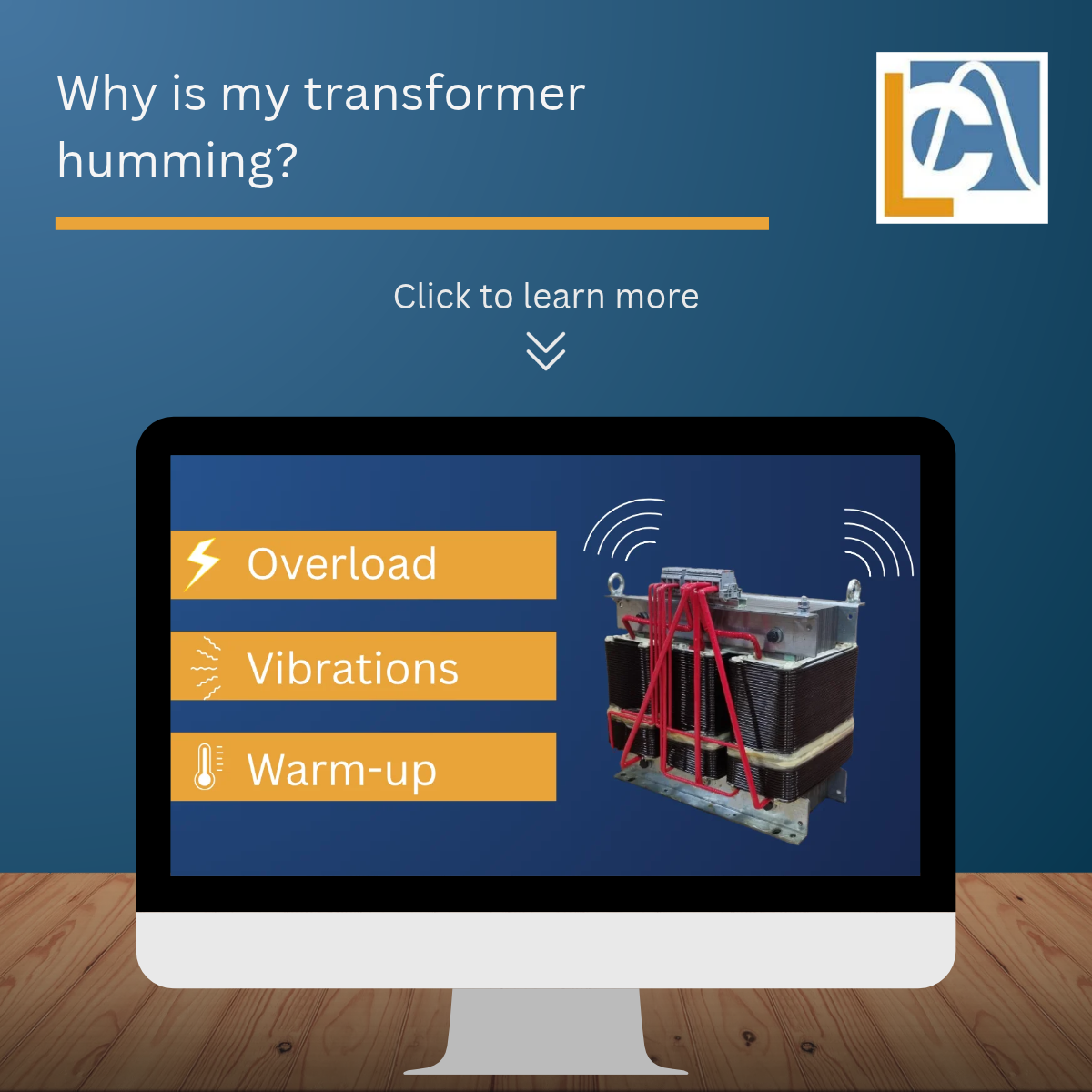
Why is my transformer humming?
A transformer that hums isn't necessarily defective. An electrical transformer naturally produces a slight hum when it's operating. The laminations in the magnetic circuit expand and contract very slightly…
Contact Us
 English
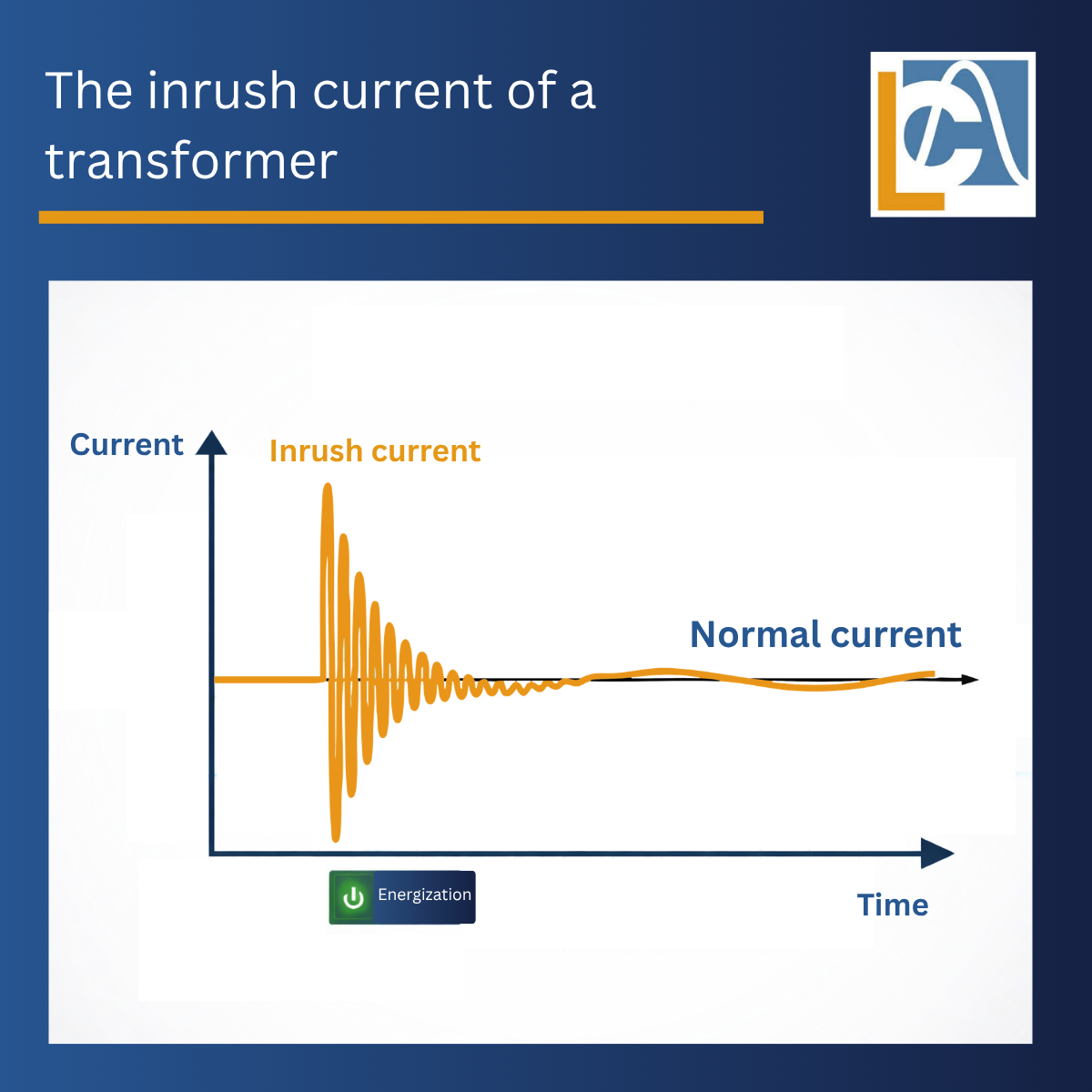
At the precise moment of powering up, transformateur At the precise moment of powering up, the transformer can absorb a brief but very high current. This peak, which is completely normal, lasts only a few milliseconds, but it can be enough to trigger poorly calibrated electrical protection, both in a domestic installation and in an industrial environment. This phenomenon is often compared to starting an electric motor. The result is similar (a strong current draw), but the cause is totally different. An engine must overcome mechanical inertia. A transformer, on the other hand, does not move. Everything is played out inside, in its magnetic circuit.
The core of a transformer is made up of a magnetic core, usually made of iron or ferrite. Its role is to channel the magnetic flux created by the current that passes through the primary winding.
To imagine the phenomenon, we can compare this nucleus to a reservoir. As long as it is not full, it absorbs and guides the flow without difficulty. But like any tank, it has a limit. When the magnetic flux becomes too great, the material becomes saturated. From that moment on, the nucleus no longer plays its role as a regulator. The current is then limited only by the resistance of the copper wire... which is very low. As a result, the intensity rises sharply.
There are two situations
But this saturation does not happen randomly. It is highly dependent on when the transformer is energized.
The mains current is not constant: it follows a sine wave at 50 Hz (in Europe). Depending on the precise moment the switch is pressed, the behavior of the transformer can be radically different.
Two extreme cases allow us to understand it well:
The effects observed:
And that's not all: the transformer can react differently depending on... His past: the residual magnetization.

When a transformer is de-energized, the core does not always return to a perfectly neutral state. Part of the magnetism can remain frozen in the material: this is called residual magnetization. This phenomenon is particularly pronounced on toroidal transformers, where the magnetic circuit is closed and continuous.
On reboot, this "memory" strongly influences the inrush current:
This is why two successive power-ups can produce completely different behaviors, without any change in load.
Ces précautions sont particulièrement importantes lorsqu’un transformateur est utilisé avec un gradateur.
The consequences of the inrush current are very real. A peak of 16 A can cause a voltage drop of about 20 V on a local installation. This is enough to cause the lights to flash or disturb sensitive electronic equipment. A "fast" circuit breaker or fuse is not suitable: it would circuit or melt instantly, even if there is no transformer fault. The solution is to use timed protection, such as a "D-curve" circuit breaker or a timed fuse. They are designed to withstand a brief peak while remaining effective in the event of prolonged overload.
A transformer that hums isn't necessarily defective. An electrical transformer naturally produces a slight hum when it's operating. The laminations in the magnetic circuit expand and contract very slightly…

In many industrial, technical, or sensitive environments, the power supply must be reliable, stable, and safe. The isolation transformer meets these requirements precisely. Often unobtrusive within a system, it…
At Le Cosinus, we have been manufacturing and supporting transformers, inductors, and DC power supplies for nearly 80 years. But behind every transformer, there is much more than just a…
