


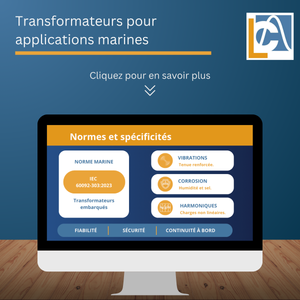
Transformers for Marine Applications: Standards and Specific Requirements
To ensure safe and efficient operation, marine transformers must meet strict regulatory standards. Marine transformers must withstand conditions…
Contact Us
 English
Since 1 July 2021, an important milestone has been reached for transformer manufacturers and users across Europe with the entry into force of Phase 2 (Tier 2) of the Ecodesign Directive. Behind this regulatory framework lies a clear objective: to reduce energy losses and improve the efficiency of transformers placed on the European market.
The reference legislation is Commission Regulation (EU) No. 548/2014, as amended by the 2019 consolidated version. However, navigating the legal provisions and technical tables can make it difficult to understand the practical implications for industrial projects and electrical installations.
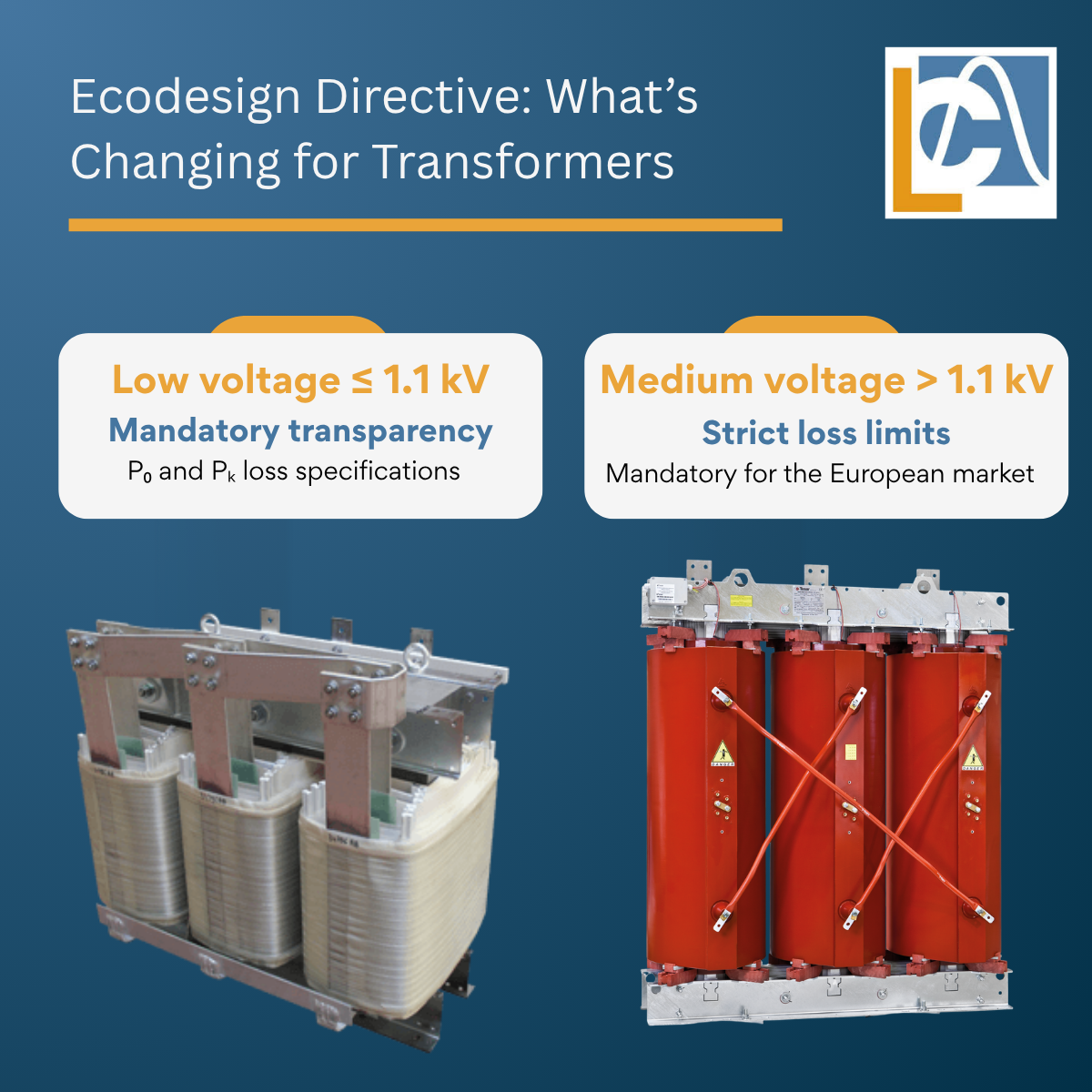
Under the Directive, a transformer is considered low-power when its highest voltage does not exceed 1.1 kV. The regulation applies to all transformers with a rated power of at least 1 kVA. This includes the vast majority of low-voltage/low-voltage (LV/LV) transformers used in commercial buildings, industrial workshops, technical infrastructure, and similar applications.
Pour cette catégorie, l’Union européenne a choisi une approche fondée sur la transparence plutôt que sur l’imposition de seuils stricts. Aucun plafond de pertes n’est fixé pour les transformateurs basse tension. La raison est simple : leurs caractéristiques et usages sont très variés. Fixer une limite uniforme aurait été peu adapté à la réalité du terrain.
However, one requirement is mandatory: manufacturers must clearly state the no-load losses (P₀) and load losses (Pₖ) in the technical documentation.
The objective is to enable purchasers, consulting engineers, and facility operators to compare energy performance and select the most efficient solutions. For low-voltage transformers, the Ecodesign Directive therefore does not impose minimum efficiency requirements, but it does require complete transparency regarding transformer losses.
When the operating voltage exceeds 1.1 kV—for example, a 20 kV / 400 V transformer—the requirements become significantly more stringent. In this case, the Directive goes beyond information disclosure and establishes mandatory performance limits. Maximum permissible values for no-load losses (P₀) and load losses (Pₖ) are specified in detailed tables. These limits were tightened during the transition to Phase 2 (Tier 2), with an average reduction of approximately 10% compared with Phase 1.
Concrètement, un transformateur moyenne tension qui dépasse ces valeurs ne peut plus être mis sur le marché ni mis en service au sein de l’Union européenne. Certaines situations particulières échappent toutefois à ces exigences. C’est notamment le cas des transformateurs de mesure, des appareils destinés aux fours industriels ou au soudage, des équipements installés sur des plateformes offshore ou à bord de navires, ainsi que des installations temporaires mises en place en cas d’urgence.
The Ecodesign Directive has fundamentally changed the way transformers are designed, selected, and marketed across Europe.
For low-voltage transformers, it promotes transparency and energy-conscious decision-making.
For medium-voltage transformers, it establishes mandatory minimum energy performance requirements that must be met before a transformer can be marketed or put into service.

To ensure safe and efficient operation, marine transformers must meet strict regulatory standards. Marine transformers must withstand conditions…
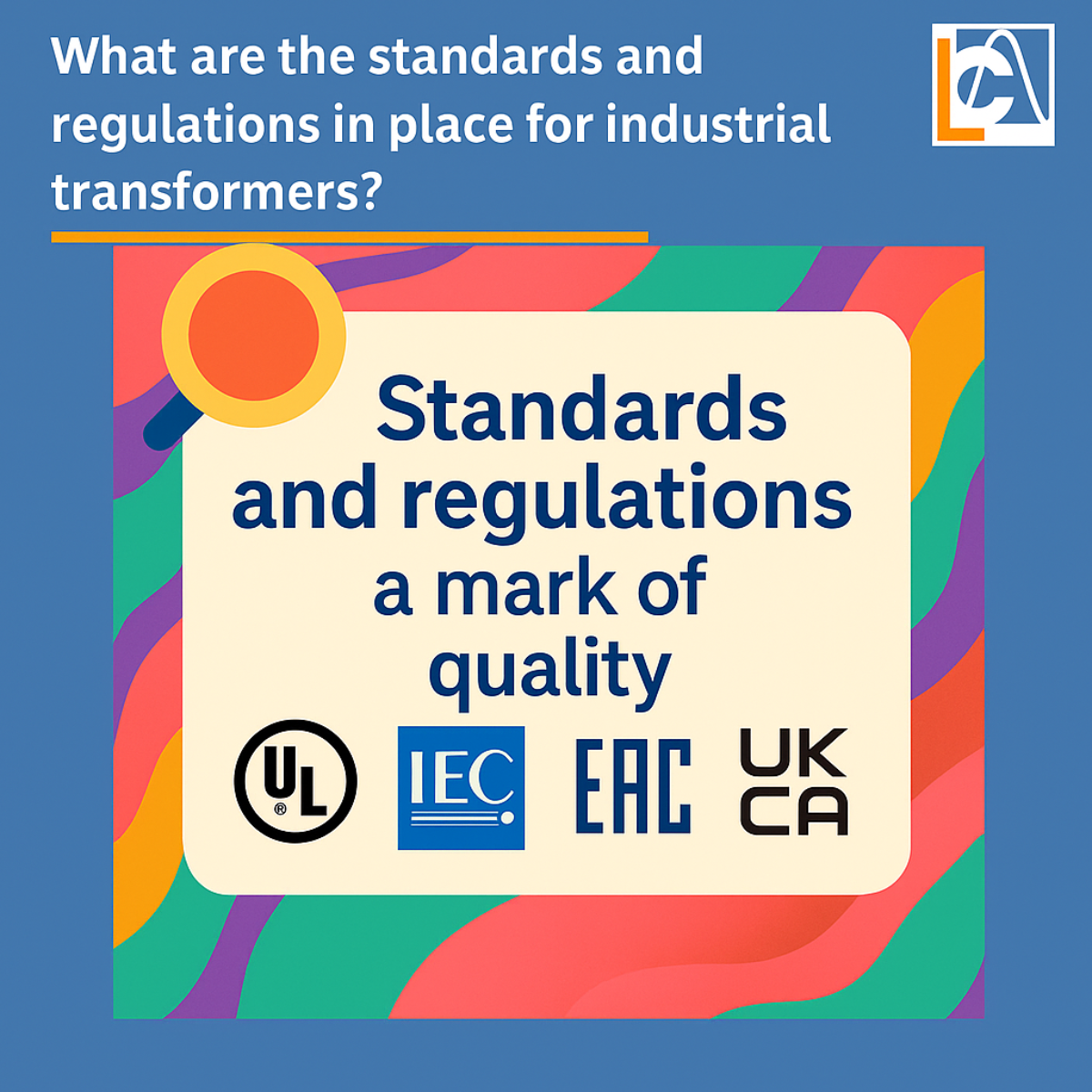
Industrial electrical transformers are subject to a set of standards and regulations designed to ensure their safety, performance and compliance with European and environmental requirements. At Le…

At Le Cosinus, an electrical transformer manufacturer, we firmly believe that sustainability and innovation can go hand in hand. Since our founding, we have always been committed to combining excellence…
